
SELMAN ABRAHAM WAKSMAN

SELMAN ABRAHAM WAKSMAN

·       Selman Abraham Waksman was a Ukraine scientist.
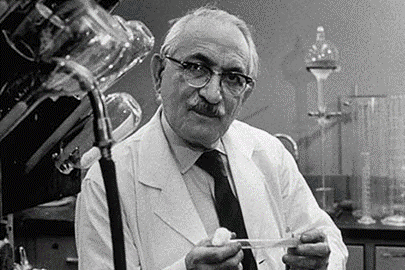
·       Selman Waksman coined the term “Antibiotics”.

  Selman Waksman has isolated nearly 20 Antibiotics including Actinomycin (1940), Clavacin, Streptothricin (1942), Streptomycin (1943), Grisein (1946), Neomycin (1948), Fradicin, Candicidin, Candidin, and others. Two of these, Streptomycin and Neomycin have found extensive application in the treatment of numerous infectious diseases.

·       Selman Waksman’s fields of work include

ü  Microbiological population of the soil

ü  Sulphur oxidation by bacteria

ü  Microorganisms and soil fertility

ü  Decomposition of plant and animal residues

ü  Nature and formation of humus

ü  Occurrence of bacteria in the sea and their role in marine processes

ü  Taxonomy, Physiology and Biochemistry of the Actinomycetes

·     Selman Waksman received Nobel prize in 1952 for his discovery of Streptomycin (the first antibiotic active against Tuberculosis).

Comments

Popular posts from this blog

15 Days International Online Certificate Course on “FUNDAMENTALS OF MICROBIAL INSTRUMENTATION”

  DAY CHAPTER NUMBER TOPICS Day – 1 21.01.2026 1 Orientation to the Microbiology Laboratory 2 Parts of Microscope 3 Bright Field Microscope and Dark Field Microscope 4 Difference between Simple Microscope and Compound Microscope Day – 2 22.01.2026 5 Electron Microscope 6 Difference between Light Microscope and Electron Microscope 7 Difference between Scanning Electron Microscope and Transmission Electron Microscope Day – 3 23.01.2026 Quiz 1 from Day 1 Lecture Videos and Day 2 Lecture Videos (20 Multiple Choice Questions) Day – 4 24.01.2026 8 An Introduction to Spectrophotometer 9 Preventive Measures in Spectrophotometer 10 Spectrophotometer - Applications, Adva...

International Four Weeks Online Certificate Course on “MICROBIOLOGY LABORATORY TECHNIQUES” (Phase - III)

ONLINE COURSE CONTENTS DAY CHAPTER NUMBER TOPICS Week - 1 1 Orientation to Microbiology Laboratory 2 Sterilization – Physical method (Drying, Dry heat and Moist heat) 3 Sterilization – Physical method (Filtration and Radiation) 4 Sterilization – Chemical method 5 Evaluation of Disinfectants 6 Parts of Microscope 7 Difference between Simple microscope & Compound microscope 8 Difference between Light microscope & Electron microscope 9 Difference between SEM and TEM 10 Culture medium 11 Guidelines for the Collection of Clinical Specimens 12 Collection of Clinical specimens 13 Transport of Clinical specimens Week – 2 14 ...

CONFLICT OVER SPONTANEOUS GENERATION (Spontaneous Generation, Francesco Redi, John Needham, Lazaro Spallanzani and Louis Pasteur's Swan Neck Flask Experiment)

  SPONTANEOUS GENERATION ·        “Living organisms can arise from non-living things” is referred as Spontaneous generation (or) Abiogenesis. ·        For example, ü   Mice from Grains ü   Beetles from Dust ü   Worms and Frogs from Mud ü   Maggots from Rotting meat.  ·         Aristotle (384 – 322 BC) (Greek Philosopher) (Father of Biology) proposed Spontaneous Generation Theory at 350 BC. ·        The microbiology starts when the disprove of Spontaneous Generation theory. FRANCESCO REDI (1626 – 1697) ·        Francesco Redi (Father of Parasitology) proposed “Theory of Biogenesis” – Life comes from Life in 1665. ·       Francesco Redi was the first who disproved the “Theory of Spontaneous Generation” by showing that ...